
Start with the signs you can actually locate
Listen for movement in an attic, ceiling, or wall void around dusk or during quiet nighttime hours. Look for droppings near pet dishes, food storage, recycling, garages, firewood, or attic access. Check for gnawing, shredded nesting material, rub marks along beams and pipes, disturbed insulation, and fruit or nuts that have been hollowed out.
Outside, watch fence tops, utility routes, tree trunks, dense ivy, and the transition where a branch approaches the roof. A roof rat can live in landscaping and forage at another property, so a sign near a tree or fence may still connect to a roofline entry point. Record the exact location instead of assuming every noise comes from the same place.
Roof routes are different from ground routes
Roof rats commonly nest above ground in trees, dense vegetation, attics, wall voids, ceiling voids, and cabinets. That makes the upper perimeter important. Inspect soffit vents, roof returns, attic vents, chimney caps, gaps around cables, and openings around pipes. Damaged screens or loose vent covers can create access even when doors and windows look secure.
Look up from the yard. Branches that touch or nearly touch the roof can create a bridge. Dense vines and shrubs against the wall can offer cover. Pruning overhanging branches, thinning dense growth, and separating plant material from the structure can make routes easier to see and less comfortable to use. These changes do not replace an inspection, but they improve the property map.
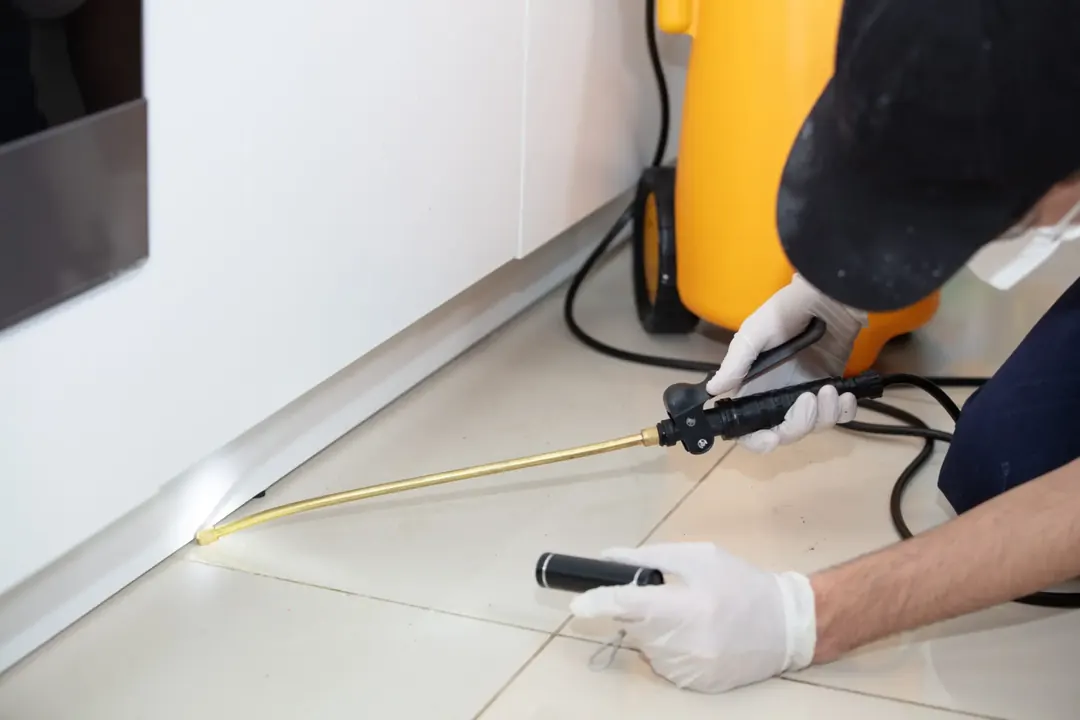 Roof rat signs around the roofline — a property detail worth noticing.
Small gaps deserve serious attention
Rats can use openings larger than about a quarter inch, especially around pipes, wires, vents, doors, screens, and foundation transitions. A good exclusion check looks above ground level as well as at the foundation. Lightweight mesh or temporary filler may not hold up when an animal can gnaw through it, so the repair material and installation matter.
Do not seal an opening blindly if activity may still be inside a wall, attic, or void. Closing the only exit can create a new problem. First identify the likely route, check for signs of current use, and coordinate the next step so exclusion and population control are working together rather than against each other.
Food and shelter keep a route active
Sanitation is part of rodent control. Keep garbage lids tight, clean food residue from containers, collect fallen fruit and nuts, store firewood and equipment off the ground, and keep pet food in a rodent-resistant container. Compost, dense ground cover, and clutter under sheds can provide food or nesting material.
Roof rats are attracted to mature landscaping, especially when cover reaches the roof or wall. Trim a tree canopy away from the building where practical, thin dense vines, and make stored materials easier to inspect. A clean yard does not promise a quiet roofline, but it reduces the number of hidden routes available.
 Small property details can shape the larger pest pattern.
What a focused service conversation should include
Share the first sign, the exact room or exterior zone, the time of day, nearby trees or utility lines, and any recent change in landscaping, storage, roof work, or food access. If there are sounds in the attic, note whether they occur near a vent, eave, or ceiling area.
A focused plan can then consider inspection, exclusion, trapping, sanitation, and the access points most likely to matter. Avoid moving unknown nesting material with bare hands, and keep children and pets away from active traps or control products. The goal is a clear sequence that protects the building while reducing the conditions that invite the route back.
Read the roofline as a connected system
A Sacramento roof-rat concern rarely belongs to only one corner of the property. Tree canopy, fruit, fence lines, attic vents, storage, and small openings can connect. Find the signs, map the route, reduce food and cover, and address access carefully. That is more reliable than waiting for a direct sighting before taking the pattern seriously.